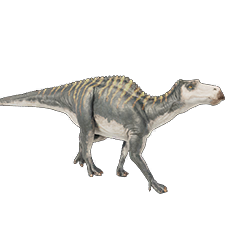
Maiasaura
Size
| Size | Medium |
|---|---|
| Height (m) | 3 |
| Length (m) | 9 |
| Weight (kg) | 907 |
Classification
| Diet | Ground Paleobotany |
|---|---|
| Habitat | Terrestrial |
| Era | Late Cretaceous |
| Family | Hadrosauridae |
| Genus | Maiasaura |
| Bio Group | Medium Herbivore |
Rating
| Base Appeal | 43 |
|---|---|
| Appeal (Per Hectare) | 196.4 |
| Base Dominance | 40 |

Stats
| Lifespan | 53 - 105 |
|---|---|
| Resilience | 130 |
| Attack | 16 |
| Defence | 24 |
| Medical Dart Resistance | 60 |
| Sedative Resistance | 60 |
| Poison Resistance | 125 |
| Appetite | 125 |
| Bite Size | 13 |
Security
| Security Rating |  |
|---|---|
| Threat | Human |
| Dinosaur Send / Summon | Yes |
Environmental Needs
| Comfort | 50% / 70% / 90% | |
|---|---|---|
| Pasture (m2) | 3491 | 60% |
| Ground Nut (m2) | 863 | |
| Ground Fiber (m2) | 863 | |
| Water (m2) | 579 | |
Genome Trait Chances
| Genetic Mods (Max) | 8 | |
|---|---|---|
| Resilience | 25% | Resilient |
| Sociability | 50% | Social |
| Tolerance | 50% | Tolerant |
| Habituation | 8% | Docile |
| Nocturnal | 6% | Nocturnal |
| Skittish | 25% | Skittish |
Unlock requirements
Unlocked by retrieving the fossil from one of the following dig sites:
| Dig Sites | Locations | Fossils | Requirements (Logistics) | Duration | Cost |
|---|---|---|---|---|---|
| Egg Mountain | North America ┗ USA ┗ Montana |  x2  x3  x3 | 2 | 45s | $101,000 |
Synthesis
| Eggs | 2 - 4 |
|---|---|
| Requirements (Genetics) | 3 |
| Scientists (Max) | 5 |
| Duration | 1m |
| Cost | $93,000 |
| Cost (Genetic Mods) | $4,650 |
Incubation
| Requirements (Welfare) | 5 |
|---|---|
| Scientists (Max) | 5 |
| Duration | 3m |
| Cost | $47,000 |
Breeding
Disease
| Immune | None |
|---|---|
| Susceptible | Avian Influenza |
Description
Maiasaura’s name translates to ‘good mother lizard’, as it was the first dinosaur to show evidence of feeding hatchlings while they were still in the nest. Notable for having a bill rather than a snout or nose, Maiasaura was a large herbivore (growing up to 9m in length and weighing in excess of 900kg) that fed on leaves, branches, ferns and other plants.
Discovery
American paleontologists Robert Makela and Jack Horner first described Maiasaura in 1979, after a range of fossils were excavated from the Two Medicine Formation, Montana the previous year. The finds consisted of an adult dinosaur along with numerous juveniles and broken eggshells, and further investigation of the area found over 200 specimens, leading to the colloquial name ‘Egg Mountain’.
Paleoecology
Maiasaura lived alongside numerous other dinosaurs including Troodon and Orodromeus during the Late Cretaceous period, around 75-80m years ago. The location of so many eggshells in close proximity suggests that Maiasaura lived in groups, while research has shown that they roamed forests which provided plenty of vegetation while hiding them from predators.


Cohabitation Preferences
Behaviors are scripted in game files but are not guaranteed to happen. Dominance, territory, and traits determine whether they would actually fight.