Cearadactylus
Size
| Size | Medium |
|---|---|
| Height (m) | 1 |
| Length (m) | 4.5 |
| Weight (kg) | 15 |
Classification
| Diet | Piscivore, Live Prey |
|---|---|
| Habitat | Aerial |
| Era | Early Cretaceous |
| Family | Anhangueridae |
| Genus | Cearadactylus |
| Bio Group | Flying Reptile |
Rating
| Base Appeal | 103 |
|---|---|
| Appeal (Per Hectare) | 806.4 |
| Base Dominance | 46 |

Stats
| Lifespan | 35 - 70 |
|---|---|
| Resilience | 130 |
| Attack | 27 |
| Defence | 19 |
| Medical Dart Resistance | 60 |
| Sedative Resistance | 25 |
| Poison Resistance | 155 |
| Appetite | 50 |
| Bite Size | 25 |
Security
| Security Rating |  |
|---|---|
| Threat | Helicopter Human Ranger Team |
| Dinosaur Send / Summon | No |
Environmental Needs
| Comfort | 50% / 70% / 90% | |
|---|---|---|
| Pasture (m2) | 467 | 27% |
| Wetland (m2) | 808 | 47% |
| Arid (m2) | 254 | 15% |
| Fish (m2) | 5 | |
| Water (m2) | 169 | |
Genome Trait Chances
| Genetic Mods (Max) | 9 | |
|---|---|---|
| Thirst | 50% | Quenched |
| Appetite | 25% | Small Appetite |
| Habituation | 8% | Docile |
| Nocturnal | 8% | Nocturnal |
| Skittish | 25% | Skittish |
| Defence | 25% | Vulnerable |
Unlock requirements
Unlocked by research in a Science Center
Synthesis
| Eggs | 1 - 4 |
|---|---|
| Requirements (Genetics) | 6 |
| Scientists (Max) | 5 |
| Duration | 1m |
| Cost | $126,000 |
| Cost (Genetic Mods) | $6,000 |
Incubation
| Requirements (Welfare) | 5 |
|---|---|
| Scientists (Max) | 5 |
| Duration | 3m |
| Cost | $126,000 |
Breeding
Disease
| Immune | Foot And Mouth |
|---|---|
| Susceptible | None |
Description
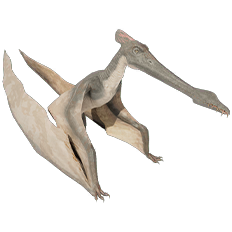
Cearadactylus is a genus of large pterosaur, with a wingspan of approximately 4-5 meters. Its long beak and thin, sharp teeth allow this piscivore to dip down into water and grab fish to eat, while its large eyes ensure it is always aware of any potential threats from nearby predators. This flying reptile’s full name (Cearadactylus atrox) translates to ‘Ceara’s lethal finger’, a reference to the location of its discovery and its sharp talons.
Discovery
Although the exact details of its discovery are not known, the first acknowledgement of Cearadactylus as a new genus came in 1985 when fossil collectors Giuseppe Leonardi and Guido Borgomanero named the one artefact that had been found – a partial skull that was found in the Romualdo Formation, Brazil.
Paleoecology
Cearadactylus lived in South America approximately 110 million years ago, during the Early Cretaceous period. Its diet of fish show that it lived near to water. The females laid their eggs in tall trees and on cliffs, in order to protect them from predators.


Cohabitation Preferences
Behaviors are scripted in game files but are not guaranteed to happen. Dominance, territory, and traits determine whether they would actually fight.