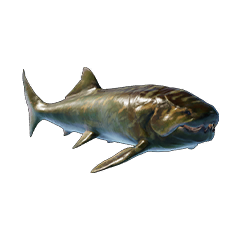
Dunkleosteus
Size
| Size | Medium |
|---|---|
| Height (m) | 1 |
| Length (m) | 10 |
| Weight (kg) | 4,000 |
Classification
| Diet | Shoal |
|---|---|
| Habitat | Aquatic |
| Era | Late Devonian |
| Family | Dunkleosteidae |
| Genus | Dunkleosteus |
| Bio Group | Marine Reptile |
Rating
| Base Appeal | 154 |
|---|---|
| Appeal (Per Hectare) | 259.3 |
| Base Dominance | 115 |

Stats
| Lifespan | 41 - 80 |
|---|---|
| Resilience | 130 |
| Attack | 70 |
| Defence | 45 |
| Medical Dart Resistance | 60 |
| Sedative Resistance | 60 |
| Poison Resistance | 150 |
| Appetite | 125 |
| Bite Size | 125 |
Security
| Security Rating |  |
|---|---|
| Threat | None |
| Dinosaur Send / Summon | No |
Environmental Needs
| Comfort | 50% / 70% / 90% | |
|---|---|---|
| Open Water (m2) | 9500 | 100% |
| Fish (m2) | 4 | |
Genome Trait Chances
| Genetic Mods (Max) | 9 | |
|---|---|---|
| Appetite | 25% | Small Appetite |
| Lifespan | 25% | Short Lived |
| Aggression | 40% | Aggressive |
| Skittish | 25% | Skittish |
| Defence | 25% | Defensive |
Unlock requirements
Unlocked by retrieving the fossil from one of the following dig sites:
| Dig Sites | Locations | Fossils | Requirements (Logistics) | Duration | Cost |
|---|---|---|---|---|---|
| Lost Burro Gap | North America ┗ USA ┗ California |  x4  x3  x1 | 5 | 4m 30s | $371,000 |
Synthesis
| Eggs | 1 - 3 |
|---|---|
| Requirements (Genetics) | 4 |
| Scientists (Max) | 5 |
| Duration | 2m |
| Cost | $128,000 |
| Cost (Genetic Mods) | $6,400 |
Incubation
| Requirements (Welfare) | 4 |
|---|---|
| Scientists (Max) | 5 |
| Duration | 4m 36s |
| Cost | $256,000 |
Breeding
Disease
| Immune | Bracken Poisoning |
|---|---|
| Susceptible | None |
Description
Dunkleosteus dates back to the late Devonian period and is the apex predator of its environment, with a set of powerful jaws that allow it to rip through even the best armored prey. This genus gets part of its name from its blunt, bony head (‘osteus’ is the Greek word for bone), and can grow up to 10m in length and weigh in excess of four tons.
Discovery
The genus was discovered by amateur paleontologist Jay Terrell in 1867 when he was searching for fossils along the banks of Lake Erie in Ohio, USA. Terrell’s find was initially believed to be a Dinichthys specimen, but further research confirmed that it was a new genus. Named after the esteemed American paleontologist David Hosbrook Dunkle in 1956, Dunkleosteus fossils have since been found across North America, Europe and North Africa.
Paleoecology
Dunkleosteus lived in a marine environment around 360-380 million years ago, preferring the bottom of the ocean where it could feed on cephalopods, ammonites, fish and even sharks. It shared its habitat with other prehistoric carnivorous fish including Titanichthys, although it had no natural predators.


Cohabitation Preferences
Behaviors are scripted in game files but are not guaranteed to happen. Dominance, territory, and traits determine whether they would actually fight.