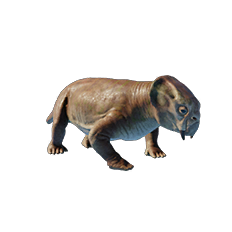
Lystrosaurus
Size
| Size | Small |
|---|---|
| Height (m) | 0.4 |
| Length (m) | 1 |
| Weight (kg) | 90 |
Classification
| Diet | Ground Paleobotany |
|---|---|
| Habitat | Terrestrial |
| Era | Late Permian |
| Family | Lystrosauridae |
| Genus | Lystrosaurus |
| Bio Group | Small Herbivore |
Rating
| Base Appeal | 37 |
|---|---|
| Appeal (Per Hectare) | 771.5 |
| Base Dominance | 54 |

Stats
| Lifespan | 30 - 61 |
|---|---|
| Resilience | 130 |
| Attack | 39 |
| Defence | 15 |
| Medical Dart Resistance | 60 |
| Sedative Resistance | 60 |
| Poison Resistance | 40 |
| Appetite | 10 |
| Bite Size | 5 |
Security
| Security Rating |  |
|---|---|
| Threat | None |
| Dinosaur Send / Summon | Yes |
Environmental Needs
| Comfort | 30% / 70% / 90% | |
|---|---|---|
| Pasture (m2) | 666 | 56% |
| Ground Leaf (m2) | 200 | |
| Ground Fiber (m2) | 200 | |
| Water (m2) | 133 | |
Genome Trait Chances
| Genetic Mods (Max) | 8 | |
|---|---|---|
| Resilience | 25% | Resilient |
| Sociability | 25% | Social |
| Tolerance | 25% | Tolerant |
| Habituation | 8% | Docile |
| Nocturnal | 8% | Nocturnal |
| Skittish | 50% | Skittish |
| Fitness | 25% | Fit |
Unlock requirements
Unlocked by retrieving the fossil from one of the following dig sites:
| Dig Sites | Locations | Fossils | Requirements (Logistics) | Duration | Cost |
|---|---|---|---|---|---|
| Guodikeng Formation | Asia ┗ China ┗ Xinjiang |  x4  x3  x2 | 2 | 3m | $84,000 |
Synthesis
| Eggs | 3 - 4 |
|---|---|
| Requirements (Genetics) | 3 |
| Scientists (Max) | 5 |
| Duration | 20s |
| Cost | $60,000 |
| Cost (Genetic Mods) | $3,000 |
Incubation
| Requirements (Welfare) | 4 |
|---|---|
| Scientists (Max) | 5 |
| Duration | 1m 12s |
| Cost | $40,000 |
Breeding
Disease
| Immune | None |
|---|---|
| Susceptible | None |
Description
Notable for its short legs and the two large tusk-like teeth protruding from either side of its mouth, the dicynodont Lystrosaurus is an herbivorous therapsid that existed during the Late Permian and Early Triassic periods, approximately 250 million years ago. In fact, at one stage Lystrosaurus made up around 95% of all land vertebrates, having survived the Permian-Triassic extinction event that destroyed the majority of all life on earth.
Discovery
Lystrosaurus was first described by renowned paleontologist Edward Drinker Cope in 1870, having been discovered by fossil collector Dr. Elias Root Beadle a few years previously. Its name translates as ‘shovel lizard’ in reference to its powerful forelimbs, which it may have used to dig burrows.
Paleoecology
Specimens of this genus have been found in locations across the world from Antarctica to South Africa, showing that Lystrosaurus travelled long distances during the era of Pangaea. Experts believe it preferred to live near plains and swamps and existed on a diet of small plants and other low-lying vegetation.


Cohabitation Preferences
Behaviors are scripted in game files but are not guaranteed to happen. Dominance, territory, and traits determine whether they would actually fight.